The Fifteen Distortions
A guide to the cognitive patterns that quietly shape distress — and the gentle skills for working with each one.

All-or-Nothing Thinking
Seeing situations in only two categories — perfect or failure, success or disaster, good person or bad — with no shades of gray in between.

Catastrophizing
When the mind takes a small concern and zooms it into a disaster — picturing the worst possible outcome as if it's already happening.

Mind Reading
Assuming you know what others are thinking — usually that they're judging you — without any evidence to confirm it.

Personalization
Taking responsibility for events you didn't cause — or believing that other people's behavior is mainly a response to you.

Emotional Reasoning
Believing that because you feel something strongly, it must be true. 'I feel like a burden, so I must be one.'
Should Statements
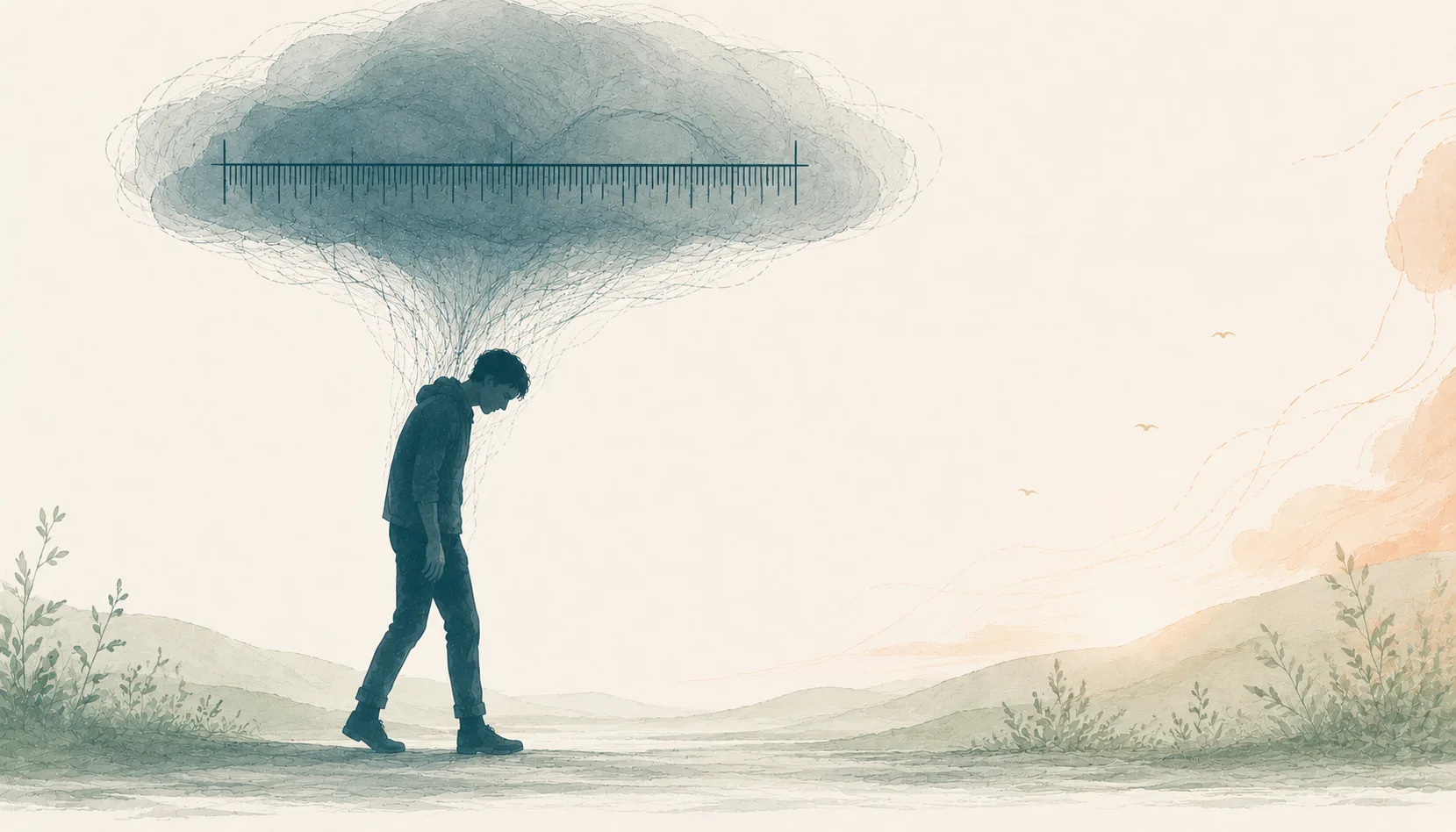
Holding yourself or others to rigid rules about how things 'should' be. The emotional consequence is guilt toward yourself and resentment toward others.

Overgeneralization
Taking a single event and drawing a sweeping conclusion from it — treating one instance as a pattern that defines everything.

Mental Filtering
Focusing exclusively on the negative parts of a situation and filtering out everything else, until the negative becomes the whole picture.

Disqualifying the Positive
Rejecting positive experiences by insisting they 'don't count' for one reason or another — keeping a negative belief intact even when reality contradicts it.

Labeling
Attaching a fixed, global label to yourself or someone else based on specific behaviors — turning 'I made a mistake' into 'I am a failure.'

Fortune Telling
Predicting the future negatively — treating a worry about what might happen as if it's already a fact.

Magnification & Minimization
Inflating the importance of negative things and shrinking the importance of positive ones — the mind's binocular trick.

Blame
Holding others entirely responsible for your distress — or insisting it's all someone else's fault — in a way that closes off your own agency.

Comparison
Measuring your inside against everyone else's outside — and using the imbalance as proof that you're falling behind.
Control Fallacies
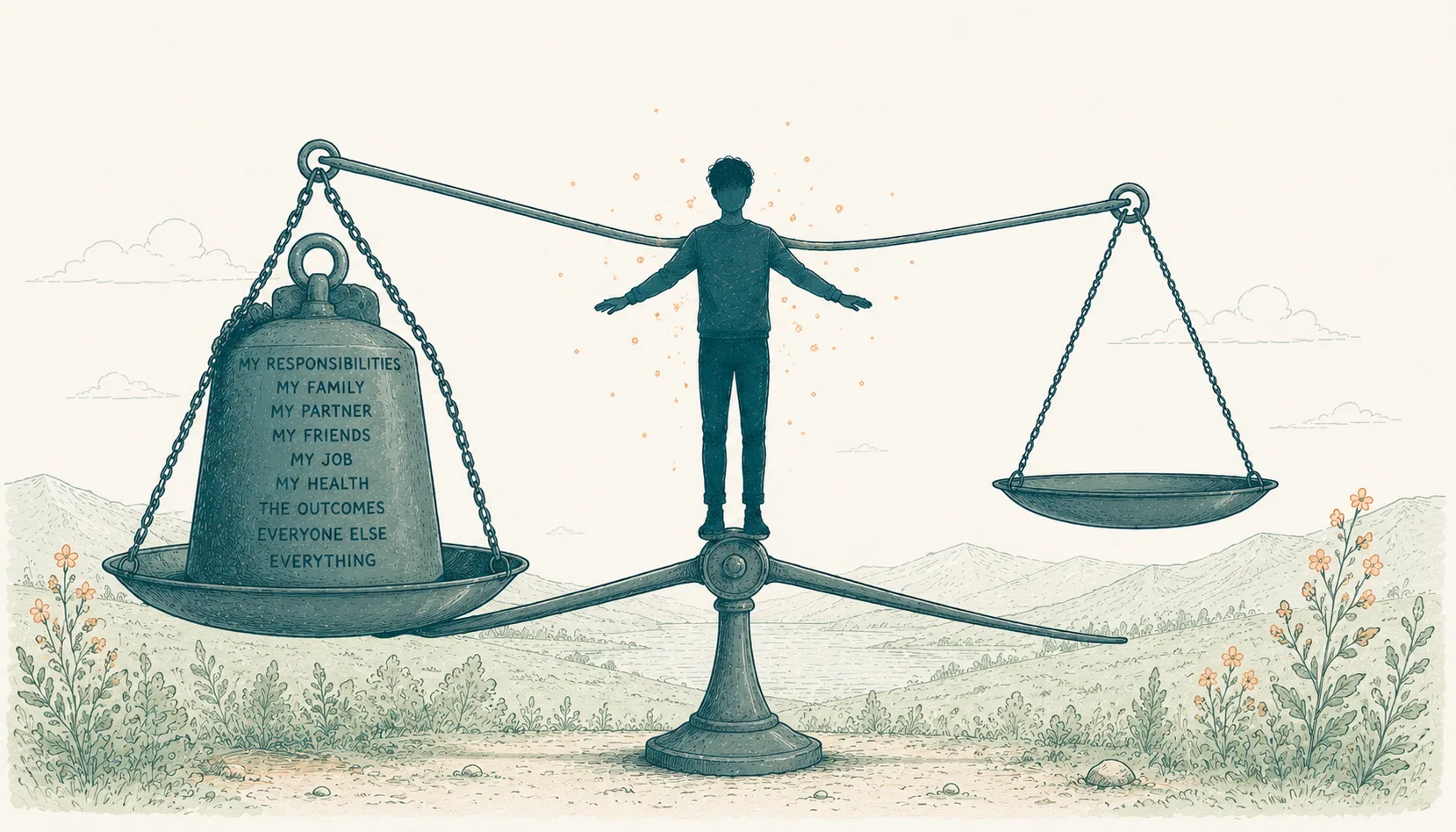
Believing you're either responsible for everything or powerless over everything — flipping between two extremes of control, neither of which is accurate.